Why PINK™ Is Green
Here are more reasons you should feel good about putting Owens Corning insulation products in your home:
Smaller bills. Bigger savings.
You might be surprised how many people don't know they're sending money through their roof.
About 78% of homeowners have not added any insulation to their attic; in part because they believe their home already has enough.**
However 80% of homes built before 1980 are not insulated to government standards.* Even newer homes may not be as energy-efficient as you think. State energy codes are only the minimum insulation requirements for new construction–not the amount recommended to optimize energy efficiency.
Overall, about 60 million homes in the U.S. are under-insulated, costing Americans $8.2 billion each year.* Simply insulating existing homes to current standards would save 800 trillion BTUs (that's 76 supertankers of oil) each year.†
Higher Resale Value
An energy-efficient home appeals to buyers' financial and environmental interests.
Research shows that 71% of homebuyers want a home that reduces their overall impact on the environment. And 96% of home buyers consider energy efficiency when buying a new home.**
A Positive Impact on the Environment
Owens Corning insulation products save many times the energy used to make it in the first year alone. And they continue to help conserve energy year after year without consuming any additional resources.
The products Owens Corning sells each year are responsible for the prevention of more than 1 billion tons of greenhouse gas emissions. This equals the emissions of 200 million passenger cars or the use of 2 billion barrels of oil.
Clearing the Air for Kids and Schools
Owens Corning was the first insulation manufacturer to qualify for the
GREENGUARD Product Emission Standard for Children and Schools
- the only independent testing program for low-emitting products.
Responsible Use of Resources
Many Owens Corning products are made with renewable resources, recycled materials or the byproducts of other production processes.
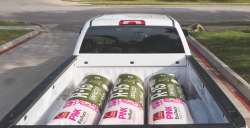
Owens Corning Fiberglas™ insulation is made of plentiful sand and recycled glass. Its minimum of 35% recycled content is the highest in the industry.
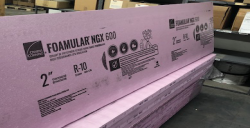
FOAMULAR® insulation contains at least 15% recycled content and Owens Corning recycles 100% of its own scrap foam. There is no foam waste taken to a landfill from our factories.
Cultured Stone® manufactured stone veneer products are made with fly-ash, a by-product of another manufacturing process. The purchase and use of this material not only beautifies homes, it reduces material sent to landfills.
Energy Alternatives & Efficiencies
And Owens Corning's environmental impact goes well beyond residential building products.
For instance, we're the leading provider of glass fiber reinforcements for wind turbine blades, with new products that will make wind energy cost-competitive. And our composite materials are also used to make lighter, more fuel-efficient cars.
For detailed information on Owens Corning's environmental stewardship,
download our Sustainability Report.
* Source: U.S. Dept of Energy (DOE)
** Source: Owens Corning Homeowner Survey 2006
† Source: Harvard School of Public Health. (See Owens Corning 2006 Sustainability Report)